Which Countertop Material Is Right for Your Kitchen, Bathroom, or Bar?

Choosing between quartz and granite countertops is one of the biggest decisions homeowners make during a kitchen or bathroom remodel. Both materials are beautiful, durable, and capable of adding long-term value to your home, but they are not the same. The best choice depends on how you use your space, the look you want, your tolerance for maintenance, and whether heat, sunlight, or natural variation matter to you.
At All American Granite, we help Twin Cities homeowners compare materials every day. This guide explains the real-world differences between quartz and granite so you can choose the surface that fits your home and your lifestyle with confidence.
Quick Answer: Is Quartz or Granite Better?
Quartz is often the better choice for homeowners who want a low-maintenance, nonporous surface with consistent color and pattern. Granite is often the better choice for homeowners who want a one-of-a-kind natural stone surface with stronger heat tolerance and a more organic look.
There is no universal winner. Quartz and granite are both premium countertop materials. The right option depends on your priorities.
Quartz vs Granite at a Glance
| Factor | Quartz | Granite |
|---|---|---|
| Material Type | Engineered stone made primarily from natural quartz and binders | Natural stone quarried from the earth |
| Appearance | More consistent color and pattern | Unique natural movement, veining, and variation |
| Maintenance | Very low maintenance | Low maintenance, but some slabs benefit from sealing |
| Porosity | Nonporous | Varies by slab; generally more porous than quartz |
| Heat Resistance | Good, but hot pads and trivets are recommended | Excellent heat tolerance |
| Outdoor Use | Usually not ideal unless specifically made for outdoor use | Often a better choice for outdoor applications |
| Pattern Consistency | More predictable from sample to installation | Each slab is unique |
| Best For | Busy kitchens, easy cleanup, modern uniform looks | Natural beauty, high heat exposure, one-of-a-kind design |
What Is Quartz?
Quartz countertops are engineered surfaces made primarily from natural quartz combined with resins and pigments. This manufacturing process creates a dense, nonporous surface that is highly resistant to everyday staining and easy to maintain.
Quartz is especially popular with homeowners who want clean lines, consistent color, marble-inspired designs, or a surface that never needs sealing. To explore styles, visit our quartz countertops page or browse our quartz selection guide.
What Is Granite?
Granite is a natural stone cut from large quarried blocks and fabricated into slabs for countertops. Because it is formed by nature, every slab has its own mineral composition, pattern, and movement. No two pieces are exactly alike.
Granite remains one of the most trusted and time-tested countertop materials because it combines natural beauty with excellent durability and strong heat resistance. Learn more on our granite countertops page or explore popular granite color options.
Appearance: Consistency vs Natural Character
One of the biggest differences between quartz and granite is appearance.
Quartz is ideal for homeowners who want a more controlled look. It offers more consistency from slab to slab, which can be especially helpful if you want a clean, modern design or are trying to match a specific cabinet, backsplash, or paint palette. Many quartz colors are designed to mimic marble or natural stone, but with a more uniform result.
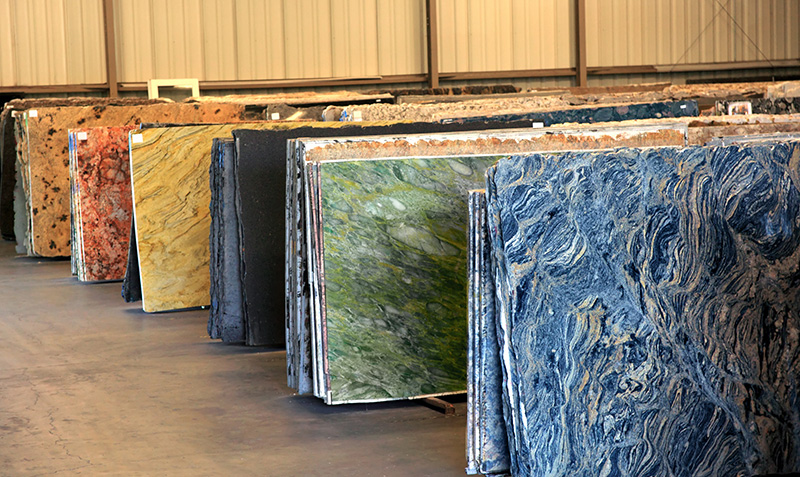
Granite appeals to homeowners who want something created by nature rather than manufactured for consistency. It often has more movement, variation, depth, and mineral detail than quartz. That natural variation is exactly what many people love about it.
If you want a countertop that looks more curated and predictable, quartz may be the better fit. If you want a countertop with unique natural character, granite is hard to beat.
Cost of Quartz vs Granite
Quartz and granite can both vary widely in price depending on the color, slab size, thickness, edge profile, availability, and project complexity. Neither material is automatically the cheaper option.
In some cases, granite can be more cost-effective. In other cases, quartz may be competitively priced, especially when comparing widely available colors and patterns. Premium granite colors and designer quartz collections can both raise the final project cost.
For a more detailed breakdown, see our guide to how granite and quartz countertops are priced.
Durability: Scratches, Chips, and Everyday Wear
Both quartz and granite are durable enough for busy homes, but they perform differently in day-to-day use.
Quartz is highly durable and resists many common kitchen stains because it is nonporous. It performs very well in active households and is a strong choice for kitchens where easy cleanup matters. Like any countertop material, however, it can chip if a heavy object hits an exposed edge or corner.
Granite is also extremely durable and holds up well to daily use. It resists scratches very well under normal conditions and is known for its toughness over the long term. Like quartz, it is not indestructible. Edges and corners still need reasonable care.
For most homeowners, both materials are durable enough for a primary kitchen, island, bathroom vanity, or bar top. The bigger differences usually come down to maintenance, heat, and appearance rather than basic strength alone.
Heat Resistance: One of the Most Important Differences
If you cook frequently or tend to move hot cookware around the kitchen, heat performance matters.
Granite generally has the advantage here. As a natural stone, it tolerates heat better than quartz and is often preferred by homeowners who want greater peace of mind around hot pots and pans.
Quartz can handle normal kitchen use well, but direct high heat and sudden temperature changes can damage the binders in the material. That is why hot pads or trivets are always recommended on quartz surfaces.
If heat exposure is a top concern, granite often has the edge.
Stain Resistance, Sealing, and Porosity
Quartz is nonporous, which is one of its biggest practical advantages. It does not require sealing, and it resists many common household spills very well when cleaned in a timely manner.
Granite is naturally more porous than quartz, but the amount can vary from one slab to another. Many granite countertops perform extremely well with normal care, and some benefit from sealing to further reduce the chance of moisture or oil absorption. Sealing is not usually a difficult task, but it is an extra consideration compared to quartz.
If your top priority is a surface that never needs sealing, quartz is usually the easier choice. If you are comfortable with a natural stone that may benefit from occasional sealing, granite remains an excellent option.
Cleaning and Maintenance
Both materials are easy to clean, but quartz is usually the simpler of the two.
For everyday care, quartz can generally be cleaned with mild dish soap, warm water, and a soft cloth. Avoid harsh abrasives, strong chemicals, and bleach-based products unless specifically approved by the manufacturer.
Granite should also be cleaned with mild soap and water or cleaners made specifically for natural stone. Avoid acidic or abrasive cleaners that may affect the surface or sealer over time.
Neither material requires complicated day-to-day upkeep. Quartz simply removes the sealing question from the equation, which many homeowners appreciate.
Outdoor Use and Sunlight Exposure
This is an area where homeowners often get incomplete advice.
Granite is generally the safer and more proven choice for outdoor kitchens and sun-exposed installations. It handles weather and heat better than standard indoor quartz products.
Traditional quartz is usually not recommended for full outdoor exposure because prolonged UV exposure can affect color over time. However, some specialty quartz products have been developed specifically for outdoor use. If you are planning an outdoor kitchen, the right answer depends on the exact product, not just the category name.
For more guidance, read Granite or Quartz Outdoors – Which Is Better?.
Which Material Is Better for Busy Families?
For many busy families, quartz is the easiest choice because it is nonporous, low maintenance, and easy to keep looking clean. It works especially well in high-use kitchens where spills, crumbs, and fast cleanup are part of daily life.
Granite is also a great family-friendly material, especially when homeowners value natural beauty and stronger heat tolerance. If your household loves to cook and wants the look of genuine natural stone, granite may be the better long-term fit.
Which Material Is Better for Resale Value?
Both quartz and granite are considered premium countertop materials and can make a home more appealing to buyers. In most cases, the quality of the design, installation, and overall kitchen matters more than whether the material is quartz or granite.
Quartz tends to appeal strongly to buyers who want a clean, updated, low-maintenance kitchen. Granite appeals to buyers who value natural stone and want a more distinctive, upscale look. A well-chosen slab in either material can be a major selling point.
Quartz vs Granite for Different Design Goals
Choose Quartz If You Want:
- A more consistent color or pattern
- Low maintenance and no sealing
- Easy everyday cleanup
- A modern, clean-lined kitchen design
- Marble-inspired looks with less maintenance
Choose Granite If You Want:
- A one-of-a-kind natural stone slab
- Greater heat tolerance
- A surface better suited to outdoor use
- Rich mineral movement and natural variation
- A timeless, organic look
Do Not Confuse Quartz with Quartzite
Many homeowners accidentally compare quartz to granite when they are actually interested in quartzite. Quartz and quartzite are very different materials. Quartz is engineered. Quartzite is a natural stone.
If you are drawn to the look of marble but want a natural stone with strong durability, quartzite may also be worth considering. Read Quartz or Quartzite – What’s the Difference? to learn more.
Quartz vs Granite FAQs
Is quartz more expensive than granite?
Not always. Both materials range from budget-friendly to premium depending on color, pattern, slab size, thickness, and availability.
Does granite always need sealing?
No. Some granite slabs are naturally dense and perform very well without frequent sealing, while others benefit from a quality sealer.
Does quartz need sealing?
No. Quartz is nonporous and does not require sealing.
Which is better with hot pans?
Granite generally handles heat better. With quartz, hot pads or trivets are strongly recommended.
Which is easier to keep clean?
Quartz is usually easier because it is nonporous and does not need sealing. Granite is still easy to maintain with the right care.
Which is better for outdoor kitchens?
Granite is often the better choice for outdoor use. Standard quartz is usually not ideal outdoors unless the specific product is rated for exterior applications.
Is granite safe to use in the home?
Yes. Granite is a widely used countertop material. If you have concerns about radon in your home, testing the home itself is the most practical step.
See Quartz and Granite in Person at All American Granite
Photos and samples are helpful, but nothing replaces seeing full slabs in person. Pattern movement, color variation, finish, and scale all look different when you stand in front of the actual material.
If you are deciding between quartz and granite countertops in the Twin Cities, visit the All American Granite showroom in Burnsville. Our design consultants can help you compare materials, discuss your goals, and guide you toward the surface that makes the most sense for your kitchen, bathroom, bar, or outdoor space.
Related reading: